
Is Your Dental Compressor Ready for the Heat? A Guide to Compressor Servicing
Home » Latest Updates » Is Your Dental Compressor Ready for the Heat? A Guide to Compressor Servicing
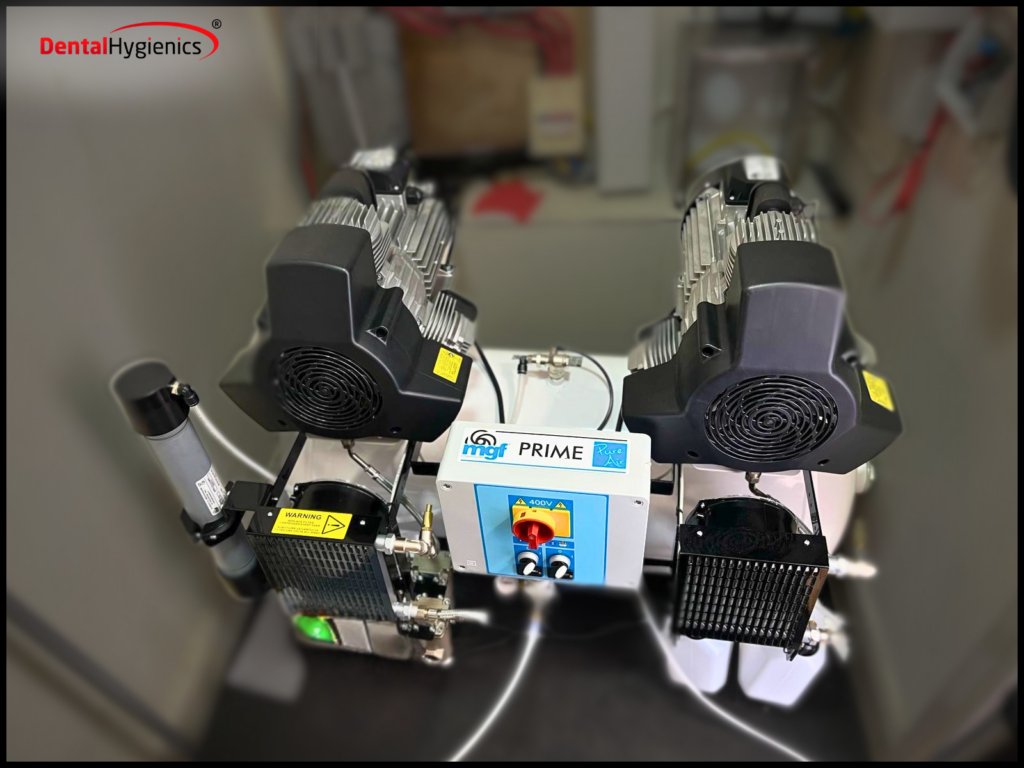
The UK is in the grip of a record-breaking heatwave. The Met Office has issued red extreme heat warnings across England and Wales, with temperatures reaching levels not seen since 2022. For most people, that means open windows and ice in their drinks. For your dental practice, it could mean something more costly: a compressor that overheats, shuts down, and brings your surgeries to a standstill. Dental compressor servicing has never been more timely, but as you will see in this guide, it is a task that matters throughout the year, not just when temperatures spike.
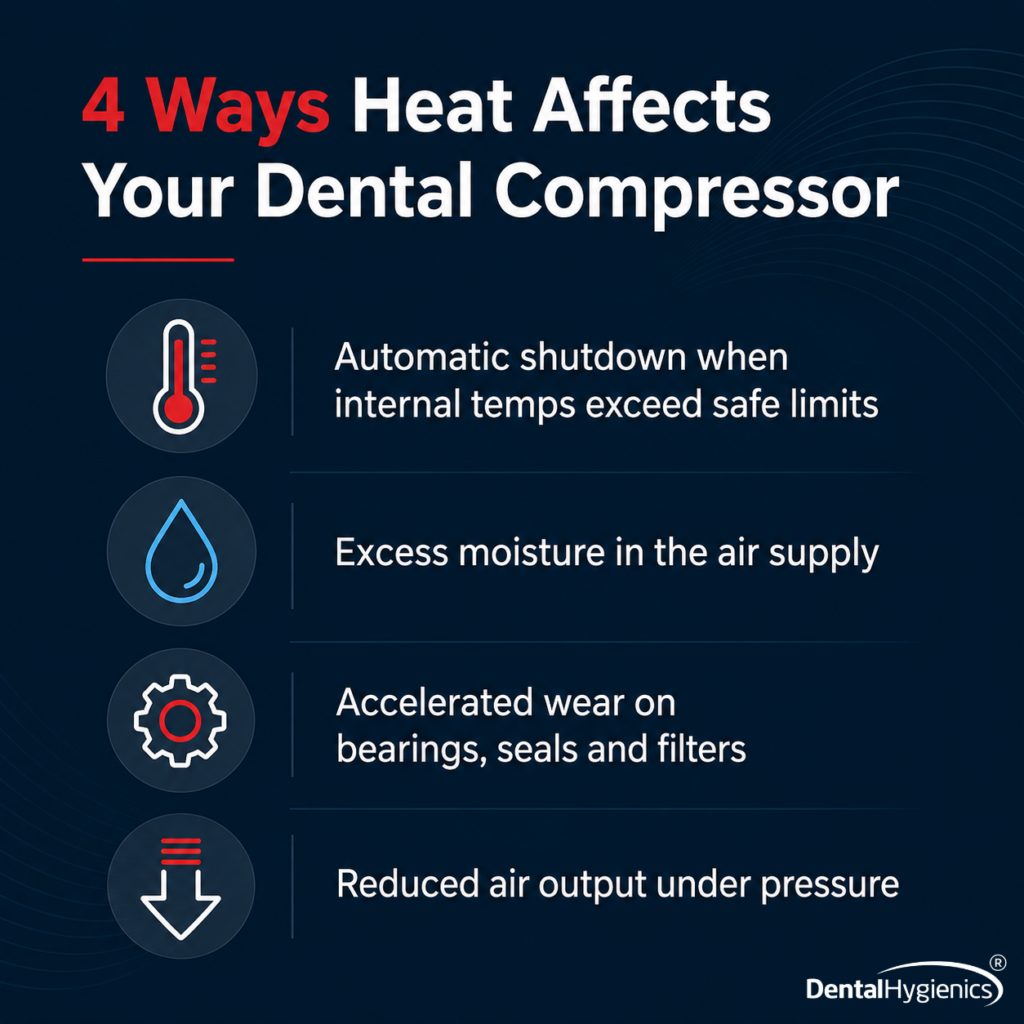
Your dental air compressor works hard in normal conditions. It is continuously compressing air to power handpieces, air-water syringes, and other pneumatic instruments across every surgery in your practice. Compression generates heat as a by-product. That is simply physics. In cooler months, that excess heat dissipates naturally. During a heatwave, the surrounding air is already warm, which makes it significantly harder for the compressor to shed the heat it is producing.
The practical consequences are real:
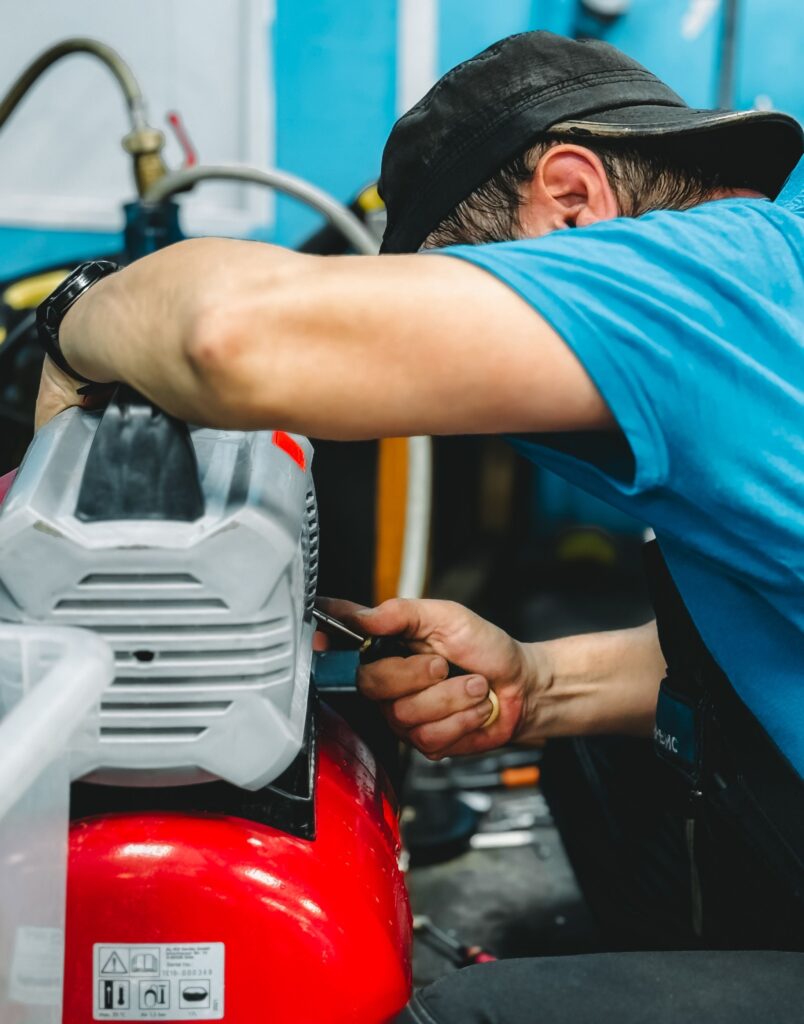
A professional dental compressor service goes well beyond a visual check. Under the Pressure Systems Safety Regulations 2000 (PSSR 2000), pressure vessels, which includes the air receiver tank on your compressor, must be formally inspected at defined intervals. This inspection, sometimes referred to as a Pressure Vessel Inspection (PVI) or Written Scheme of Examination (WSE), is a legal requirement, not an optional extra.
During a compressor service, a qualified engineer will typically:
A compressor service report is a compliance document. CQC inspectors expect to see up-to-date service records for all pressure systems in your practice. Missing or lapsed certificates can flag a compliance issue at inspection.
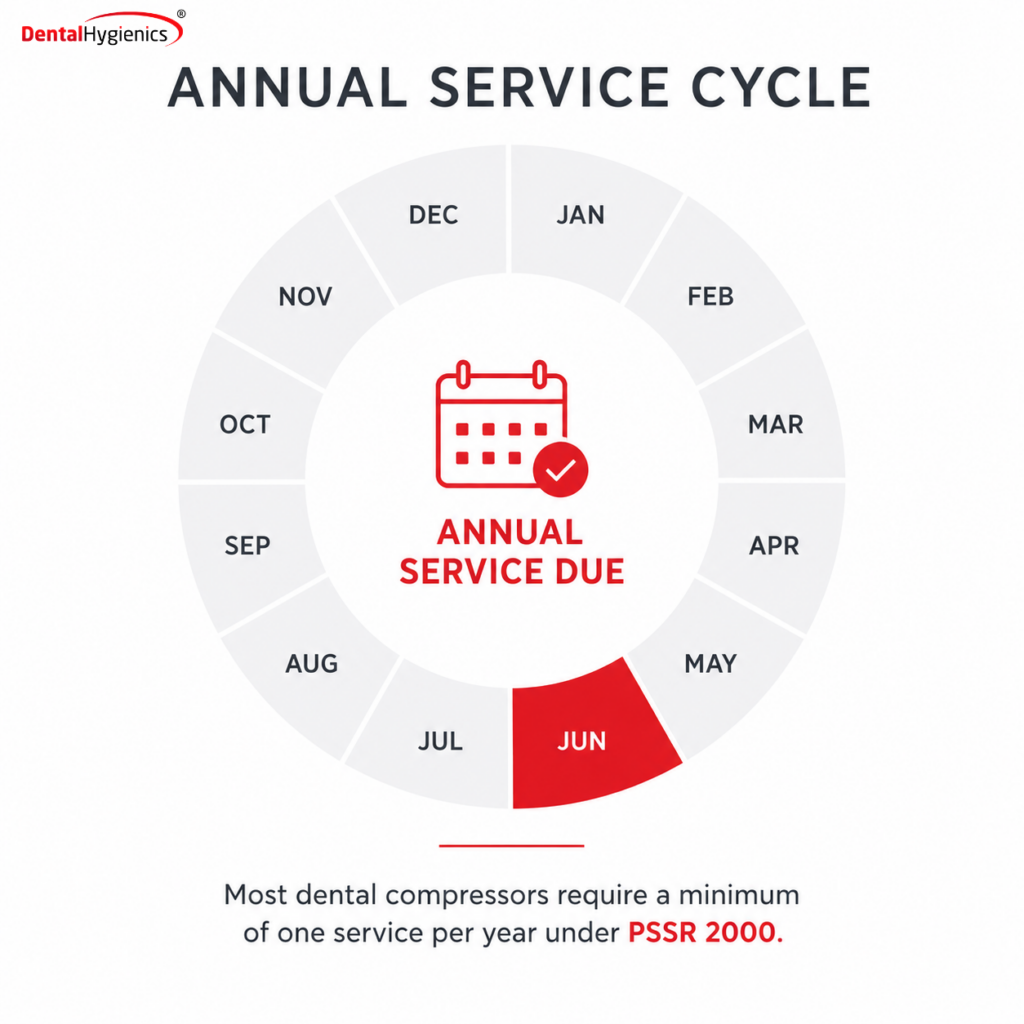
The standard recommendation across the industry is at minimum once every 12 months. However, there are circumstances where more frequent attention is advisable:
Outside of annual servicing, there are also regular user checks that practice staff should be performing. These include monitoring for unusual operating sounds, checking that the compressor room has adequate airflow, and, where your unit has one, ensuring the dryer indicator is reading correctly. If your compressor does not have a built-in dryer, the tank should be drained regularly to prevent moisture accumulation and corrosion.
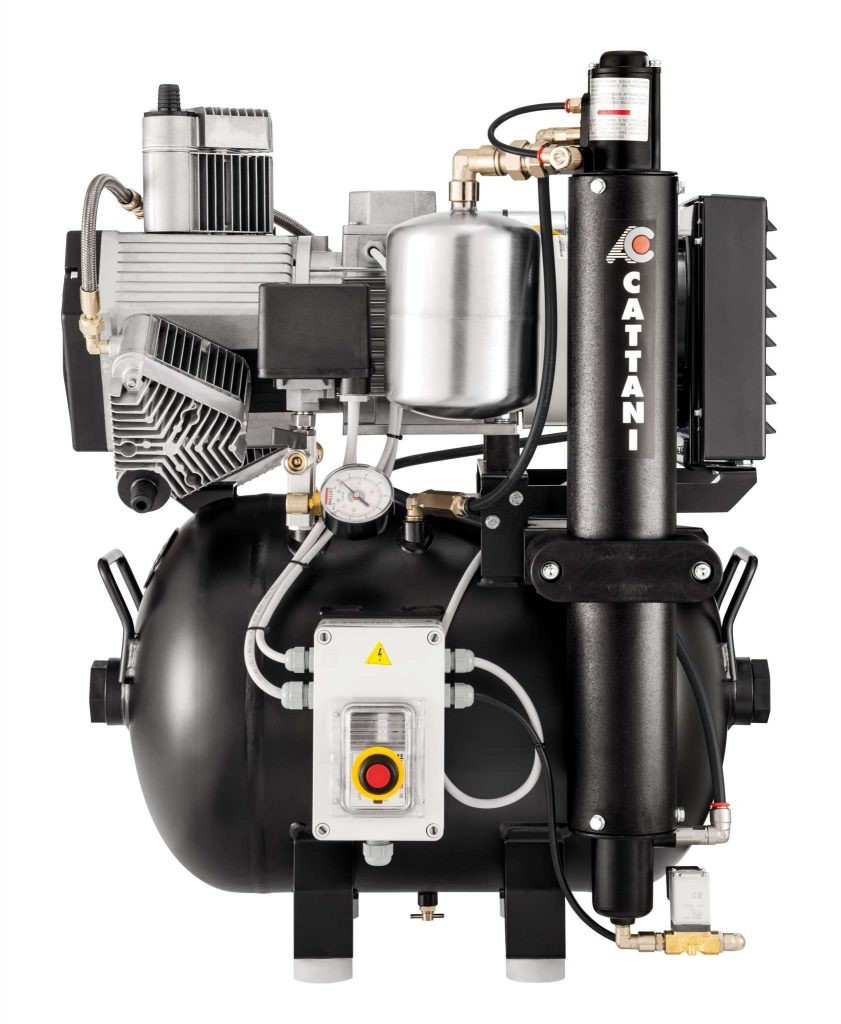
Servicing an ageing or undersized compressor gets you back to baseline, but if your unit is repeatedly struggling, it may be time to consider a replacement. At Dental Hygienics, we supply a range of dental compressors from Bambi, Durr Dental, MGF and Cattani, four of the most trusted names in dental compressed air. Whether you are equipping a single surgery or a large multi-surgery practice, we can advise on the right specification for your needs.
All three manufacturers produce oil-free, whisper-quiet compressors designed specifically for dental environments, meeting HTM 01-05 requirements and CQC compliance standards. Oil-free units are the standard in modern dental practices, as they remove the risk of oil contamination in the air supply and require less intensive maintenance than older oil-lubricated models.
The nature of a compressor failure is that it rarely gives you much warning. One day it is running, the next, particularly on a 35-degree afternoon with a full appointment book, it trips out. Emergency call-outs take time to arrange. Replacement parts may not be in stock. Loan units are not always available at short notice.
Preventive compressor servicing exists precisely to catch problems before they become emergencies. A trained engineer visiting your practice for a routine annual service might spot a filter that is close to blocking, a dryer that is beginning to struggle, or a pressure relief valve that needs attention. Each of those findings, addressed during a planned visit, is a breakdown that never happens.
The most cost-effective time to service your dental compressor is before it fails, not after.
Dental Hygienics provides compressor servicing for dental practices across the UK. Our engineers are experienced with Bambi, Durr Dental, and Cattani equipment, and all service visits include full documentation for your compliance records. Whether you are due your annual inspection, concerned about how your compressor is performing in the heat, or looking to upgrade to a newer model, we are here to help.
Get in touch with our team to arrange a service visit or to discuss your requirements. You can also browse our range of dental compressors to explore the options we supply and install.
Most dental compressors should be serviced at least once every 12 months. High-usage practices may benefit from more frequent checks. Annual servicing also fulfils the legal requirement for pressure vessel inspection under the Pressure Systems Safety Regulations 2000 (PSSR 2000).
Pressure vessel inspection is a legal requirement under PSSR 2000. While general servicing is considered best practice rather than a strict legal obligation, operating an uninspected pressure system outside its Written Scheme of Examination is a complance matter and can be flagged during a CQC inspection.
Yes. Sustained high ambient temperatures can cause compressors to overheat, trigger automatic shutdowns, accelerate component wear, and place additional strain on the dryer unit. Ensuring your compressor room is well-ventilated and that the unit has been recently serviced significantly reduces these risks during hot weather.
Dental Hygienics supplies and services dental compressors from Bambi, Durr Dental, and Cattani. You can view our full range on our compressor catalogue page.
A Written Scheme of Examination is the formal document that defines how a pressure system must be inspected and at what intervals. For dental compressors, it is produced by a competent engineer following a Pressure Vessel Inspection. It is a legally required document under PSSR 2000 and forms part of your practice’s compliance records.
Written by

Get In Touch